
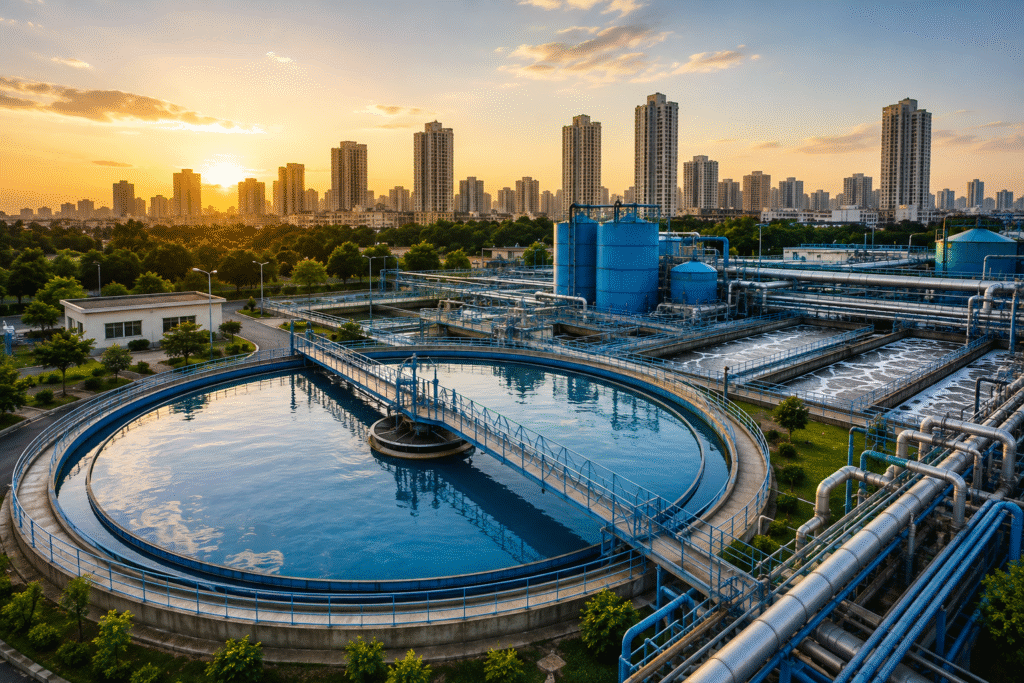
Wastewater recycling Gurgaon has become a real necessity, not just a buzzword. If you live or work in the city, you’ve probably seen it yourself — water tankers on every street, borewells running dry earlier each summer, and societies short on water even weeks after the monsoon. Gurgaon’s groundwater table keeps falling, and the city’s fast growth has widened the gap between how much water people need and how much is actually available.
Most people respond to a water shortage by chasing more water. They dig deeper borewells. They order more tankers. They push for a bigger municipal quota. But that approach is hitting its limit fast. The better fix — and the more obvious one — is to stop sending used water down the drain and start treating it as a resource worth reusing.
Why Gurgaon’s Water Crisis Keeps Getting Worse
A lot of this comes down to how the city has grown. Most high-rises and factories still depend heavily on groundwater. That water table doesn’t refill anywhere near as fast as it gets drawn down. Municipal supply hasn’t kept pace with the population either. When taps run dry, tankers become the fallback. They’re expensive. They’re unreliable. And they’re not a real long-term plan.
Regulations have also tightened. The CPCB and state pollution boards now push hard for treated water reuse, especially in new construction. It’s no longer just a box to tick on a compliance form — it’s becoming the standard.
How Wastewater Recycling Actually Works
The idea is simpler than it sounds. Water from bathrooms, kitchens, or factory processes doesn’t have to end at the drain. A treatment system, like an STP, can clean it to a safe, reusable standard. Once treated, that water can go toward gardens and landscaping. It can run through flushing systems. It can feed cooling towers. In some setups, it can even help recharge groundwater. It’s the same water — just given a second life instead of getting sent away and forgotten.
Who Benefits Most from Wastewater Recycling Gurgaon Projects
Residential societies gain on two fronts. They stay compliant with RERA norms, and they spend less overall once treated water handles gardening and flushing. Factories cut down on fresh water use while keeping their ETP compliance in check. Hotels and hospitals, which use large volumes of water daily, often see the biggest drop in operating costs.
What You Should Do Next
If your building or facility still runs on the old model — fresh water in, wastewater straight down the drain — it’s time to rethink that. A well-designed recycling system does more than satisfy a compliance checklist. It protects your property the next time the water table drops another few feet.
Epic Aquatech has designed STP, ETP, and wastewater recycling systems across Gurgaon and the NCR for over 15 years. Every project gets built around what the site actually needs, following CPCB guidelines throughout. Explore our wastewater treatment services to see what fits your property.