
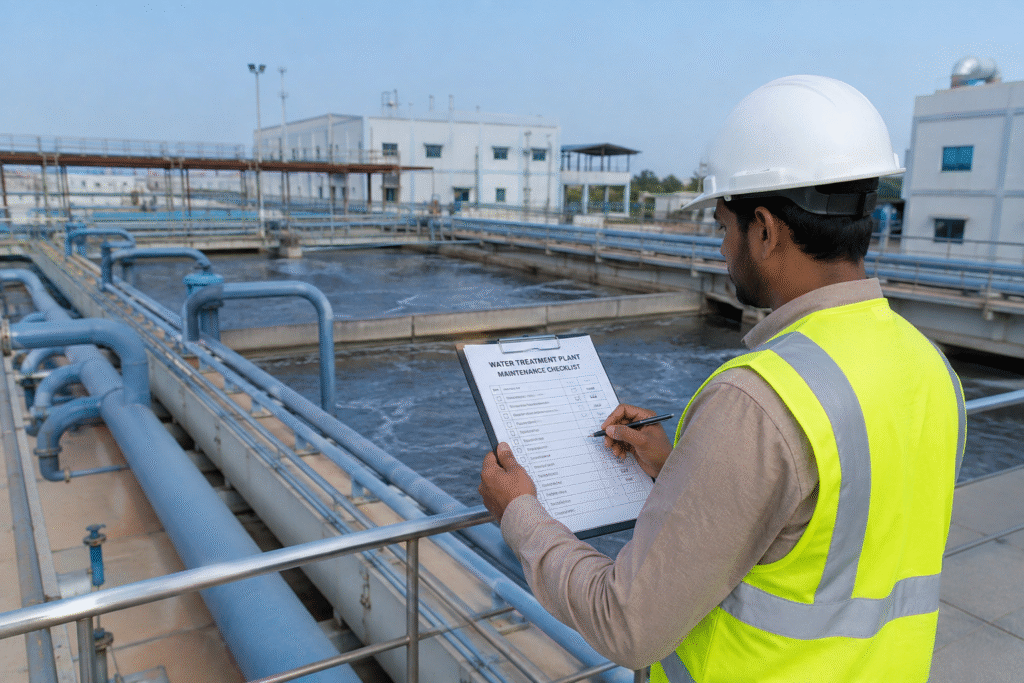
If you’ve ever managed or worked around a water treatment plant, you already know this — things don’t usually break down all at once. They wear out slowly, quietly, until one day a pump seizes up or a chlorine reading comes back wrong, and suddenly it’s a full-blown crisis. The good news? Almost all of that can be avoided with a simple habit: checking the right things, every single month, before they become problems.
This isn’t about ticking boxes for the sake of a compliance file (though yes, that matters too). It’s about actually knowing your plant — understanding what “normal” sounds like, looks like, and reads like, so you notice the moment something’s off. Here’s what that monthly check should actually cover.
Why bother with monthly checks?
Because water treatment isn’t a “set it and forget it” kind of system. You’ve got pumps running non-stop, chemicals reacting in real time, filters slowly clogging, and electrical systems that don’t always show warning signs before they fail. A monthly routine catches the small stuff before it turns into an expensive, and sometimes dangerous, big problem. Plants that skip this step almost always end up paying more later — in repairs, in downtime, or in compliance headaches.
What to actually check, month after month
Start at the intake. Before water even enters the system, check the screens and bar racks. Debris builds up here more than people expect, and a clogged intake throws off everything downstream. A quick visual check for corrosion or physical damage goes a long way too.
Give your pumps and motors some attention. Listen to them. Seriously — unusual noise or vibration is often the first sign something’s wrong, long before a gauge tells you. Check the bearings, seals, and lubrication, and compare flow rates and pressure against what you’d normally expect. If a motor’s drawing more current than usual, that’s worth investigating, not ignoring.
Don’t skip the chemical dosing systems. Chlorine, coagulants, flocculants — whatever you’re using, the feed pumps need calibration checks regularly. Storage tanks should be inspected for leaks or corrosion, and dosing rates should match your actual water quality targets, not just whatever was set months ago.
Look closely at your filters. Sand filters, media filters, membranes — all of them clog and wear over time. Keep an eye on differential pressure readings and make sure backwash cycles are actually doing their job. A filter that “looks fine” from the outside can still be underperforming.
Test the disinfection equipment properly. Whether you’re running chlorine analyzers, UV systems, or ozone generators, these need regular testing — not just at commissioning. Residual disinfectant levels should always be checked against regulatory requirements, because this is the part that directly protects public health.
Walk the valves and piping. Leaks, corrosion, sticking valves — these tend to hide until there’s an emergency. Test your shut-off valves specifically, because that’s the one thing you really don’t want failing when you actually need it.
Check the electrical side too, even if it’s not your area of expertise. Control panels, wiring, circuit breakers, SCADA systems, backup generators — all of it needs a look. A plant that loses power without a working backup system is a plant heading toward a very bad day.
Run your water quality tests. Turbidity, pH, chlorine residuals, microbial checks — this is the heart of the whole operation. Document everything. Not just because it’s required, but because trend data over months tells you things a single reading never will.
Inspect storage tanks and reservoirs. Sediment builds up more than people realize, and small cracks or leaks only get worse with time. Check the covers and hatches too — security matters as much as structural integrity.
And finally, don’t forget the paperwork and safety side. Fire extinguishers, updated MSDS sheets, current staff training records, maintenance logs — none of this is glamorous, but it’s exactly what saves you during an audit or an incident.
Why this monthly discipline actually pays off
Plants that stick to a real, consistent maintenance routine tend to have fewer surprise shutdowns, smoother compliance audits, and lower repair bills over time. Equipment lasts longer. Water quality stays consistent. And honestly, operators sleep better knowing they’re not one bad reading away from a crisis.
Bottom line
A monthly maintenance checklist isn’t extra work — it’s the work that prevents extra work later. Whether you’re running a small municipal setup or a large industrial water treatment plant, building this routine into your operations is one of the simplest, most effective things you can do to keep the plant reliable and the water safe.
Keywords: water treatment plant maintenance checklist, monthly maintenance checklist, water treatment plant maintenance, water treatment plant inspection, water treatment plant equipment maintenance, sewage treatment plant maintenance, water treatment plant operations, preventive maintenance water treatment, water treatment plant safety checklist, drinking water treatment maintenance, wastewater treatment plant maintenance, water treatment plant compliance, chemical dosing system maintenance, filtration system maintenance, water quality testing checklist