
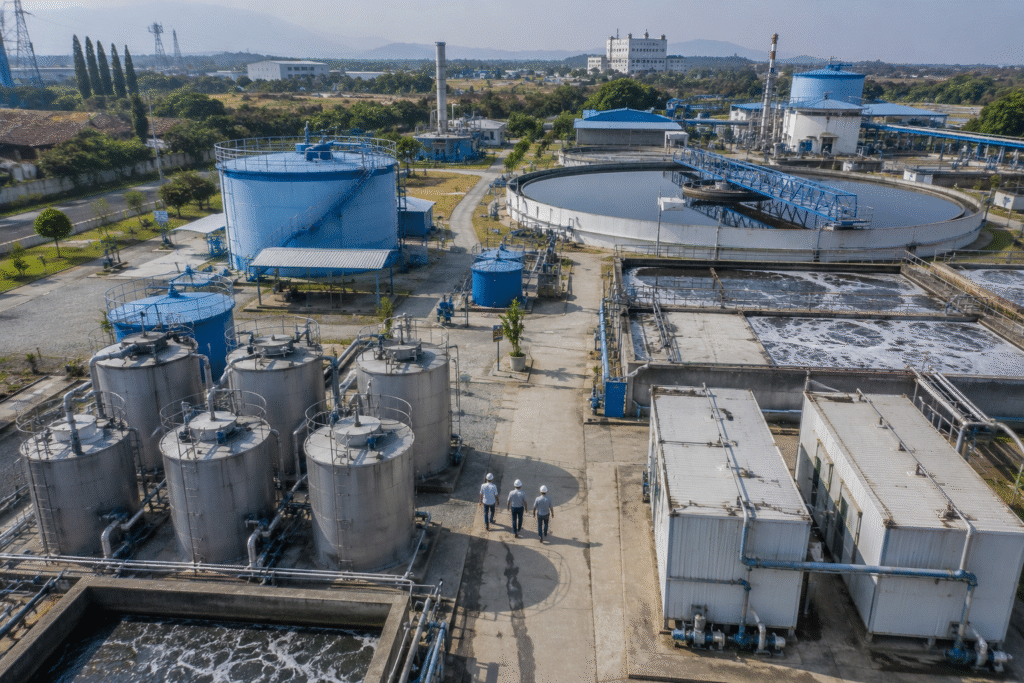
If you’re running a textile unit, a pharma facility, or any industry that CPCB or your state pollution board has flagged for zero discharge compliance, you’ve probably already asked the same question everyone asks first: “ZLD plant lagane mein kitna kharcha aayega?”
Honestly, there’s no one-line answer. A Zero Liquid Discharge (ZLD) plant isn’t a fixed-price product like a water purifier you order online — it’s an engineered system, and the price tag can swing wildly depending on your effluent, your capacity, and the technology you choose. In this blog, we’ll break down what really drives ZLD plant cost in India, so you walk into your next vendor meeting knowing exactly what questions to ask.
What Does a ZLD Plant Actually Cost?
Let’s start with the numbers, because that’s what everyone wants first.
Broadly, ZLD plant costs in India range from around ₹1.5 crore for a small 50 KLD system all the way up to ₹100 crore or more for a large 2 MLD+ industrial installation. A mid-sized 100 KLD ZLD plant typically falls somewhere between ₹4–10 crore, depending on how “dirty” your wastewater is and which technology stack you choose.
Here’s a comparison that puts things in perspective: a standard Effluent Treatment Plant (ETP) for the same capacity usually costs 3 to 5 times less than a full ZLD setup. That gap doesn’t come from anyone charging extra for the “zero discharge” label — ZLD simply adds entire treatment stages (evaporation, crystallization) that a regular ETP doesn’t need.
So why such a huge price range? Let’s unpack that next.
Key Factors That Affect ZLD Plant Cost in India
1. Plant Capacity (KLD/MLD)
This is the most obvious factor — the more wastewater you treat daily, the bigger your plant, and the higher your investment. But the relationship isn’t linear. A hotel or hospital generating a small volume of wastewater needs only a modest setup, while a chemical or pharmaceutical manufacturing unit processing several MLD needs a far more complex, and expensive, system.
2. Effluent Quality (TDS Levels)
This is honestly the single biggest cost driver, and most people underestimate it. Total Dissolved Solids (TDS) in your wastewater — often ranging anywhere from 5,000 to 15,000+ mg/L in industries like textiles — directly decide how much evaporation and crystallization work your plant needs to do. Higher TDS means more energy-intensive thermal treatment, which pushes both capital and running costs up.
3. Technology Selection: MEE vs MVR
Multiple Effect Evaporation (MEE) and Mechanical Vapour Recompression (MVR) are the two main evaporation technologies ZLD systems use, and your choice here shapes both upfront cost and long-term energy bills. MVR tends to save more energy but demands a higher initial investment; MEE costs less to install but often costs more to run over time.
4. Crystalliser or ATFD Requirement
If your pollution board mandates complete ZLD (meaning literally zero liquid leaves your site, not even the evaporator concentrate), you’ll need a crystalliser or an Agitated Thin Film Dryer (ATFD) to convert the final concentrate into dry solid waste. These units add significant cost — but they’re not always mandatory. Some units can simply store and contain the concentrate without full solidification, which can meaningfully bring costs down.
5. Type of Industry and Contaminants
Every sector’s wastewater behaves differently. Textile effluent, for instance, carries high color content and high pH along with high TDS, so it often needs a dedicated pre-treatment step (like color and COD removal) before it even reaches the ZLD stage. Pharma, chemical, and food processing units each bring their own unique contaminant profiles, and that customization pushes up engineering and equipment costs.
6. Quality of Upstream ETP / Pre-Treatment
A well-designed ETP feeding into your ZLD system reduces the load on the expensive evaporation stage. Skimp on pre-treatment, and you’ll end up overworking (and over-costing) your ZLD unit down the line. Good upstream treatment genuinely offers the smartest way to control lifetime costs, not just capex.
7. Automation and Instrumentation
Plants that need Online Continuous Emission Monitoring Systems (OCEMS) — mandatory for many Red and Orange category industries — along with higher automation levels, cost more upfront. But that money doesn’t go to waste; automation cuts manual labour costs and compliance risk over the plant’s lifetime.
8. Civil Work and Site Conditions
Land preparation, foundation work, housing structures for equipment, and site-specific civil engineering all add to the total project cost. This varies a lot depending on your location and existing infrastructure.
9. Energy Consumption (Operating Cost, Not Just Capex)
Here’s something a lot of buyers overlook: the evaporator’s electricity bill, not maintenance, drives the biggest ongoing expense in a ZLD plant. Thermal evaporation guzzles energy, so while comparing quotes, don’t just look at the capital cost — ask vendors for realistic energy consumption estimates too.
Why Does ZLD Cost So Much More Than a Regular ETP?
A conventional ETP treats wastewater and sends the treated water out as effluent, into a drain or water body. ZLD does something fundamentally different — no water leaves as liquid at all. Every drop either turns into reusable process water or ends up as dry solid waste. Reaching that point requires additional treatment stages (RO, evaporation, and sometimes crystallization) that a standard ETP simply doesn’t include. That explains the real cost gap, not overpricing.
Is There Any Way to Reduce ZLD Plant Cost?
A few practical levers genuinely help:
- Invest in solid upstream ETP treatment — it reduces the burden (and cost) on your evaporation stage.
- Choose the right technology for your TDS levels rather than over-engineering the system.
- Check if full crystallization is actually mandatory for your category, or if concentrate containment will suffice.
- Explore government grant programmes that offset ZLD compliance costs for eligible industries — these exist, so ask your state pollution board about them.
Final Thoughts
You can’t pin down ZLD plant cost in India with a single number, and honestly, stay wary of any vendor who quotes you a price without first asking for your effluent analysis. Your wastewater’s TDS, your capacity, the technology stack, and your final solid-waste handling needs decide the real cost. Get a proper effluent characterization first — that one step alone will save you from both nasty cost surprises and an oversized, over-expensive system.