
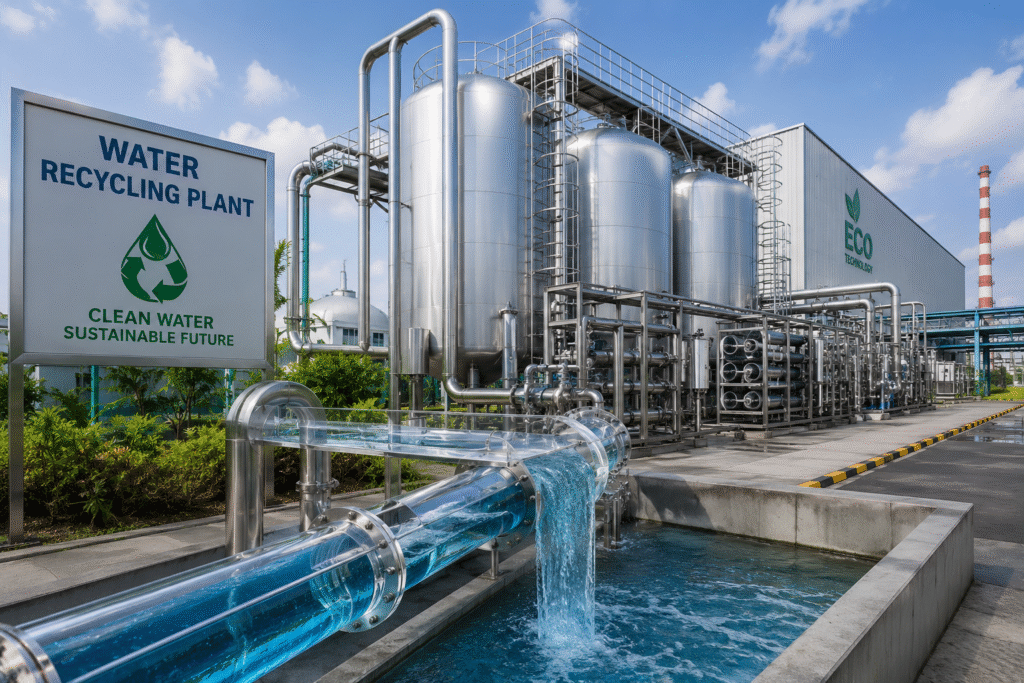
Have you ever thought about how much water a medium-sized factory uses every day? The number is honestly shocking.
Sadly, most of this water goes straight down the drain after just one use. Yet a large chunk of it could easily be reused. This is exactly where an Industrial Water Recycling Plant steps in.
In this blog, I’ll walk you through the things that actually matter. How does this plant work? What’s the rough cost? And what do you really get out of it? No jargon-heavy lecture. Just straight talk.
What This Plant Actually Does
Picture a factory. Water is being used for cleaning, cooling, or some part of the production process. Normally, this water has just one fate: treat it a little, then send it down the drain.
A recycling plant flips that thinking. It cleans that same used water well enough to send it right back into the factory. No need to call in fresh water.
People often confuse this with an ETP or STP. That’s not entirely wrong, but it’s not the full picture either. ETPs and STPs are mostly built to treat water just enough for safe discharge.
A recycling plant goes a step further. The whole point is simple: the water shouldn’t leave at all. It should go straight back inside.
What the Process Actually Looks Like
First, water enters the plant. It’s collected in a holding tank, where water from different corners of the factory all meets.
Next comes the physical cleanup. Oil, grease, and larger particles are removed using screens and settling tanks. This stage isn’t very technical. It simply gets the water ready for the next steps.
Then the real work begins: biological treatment. Bacteria are used here to naturally break down organic waste, through processes like MBBR or Activated Sludge. In a way, it’s nature’s own method, just happening inside a controlled setup.
After that, filtration takes over. Multi-Grade and Activated Carbon filters remove smaller particles, odour, and colour.
Now comes arguably the most important stage: RO, or Reverse Osmosis. This step genuinely purifies the water, pulling out dissolved salts and heavy metals.
Finally, UV treatment or chlorination fully disinfects the water. It’s then stored in a tank. From there, it goes back into the factory’s daily operations.
Let’s Talk About Cost
Here’s where I have to be honest. If anyone gives you a fixed number upfront, don’t trust it too much. Cost depends on a lot of variables.
First, there’s plant size, measured in KLD (capacity). Then there’s the technology used — RO, MBR, or UF all come with different price tags. How contaminated the raw wastewater is also matters, since dirtier water needs extra treatment stages.
On top of that, there’s civil work: building tanks, laying pipes, preparing the site. And don’t forget automation. A more automated system costs more upfront, but saves on manpower in the long run.
So, what’s a rough number? Smaller plants — say 5-10 KLD — can start in the range of lakhs. But for a scale of 500 KLD or more, costs can easily run into crores.
The best approach? Get a genuine manufacturer to visit your site. Base your estimate on your actual requirement. Don’t plan around generic numbers.
The Benefits Go Well Beyond Just Compliance
The most direct benefit is reduced dependency on fresh water. In many places today, fresh water has practically become a luxury.
It also saves money on both ends: buying fresh water and disposing of wastewater. Following Pollution Control Board norms becomes easier too. And for industries targeting Zero Liquid Discharge (ZLD), this kind of plant has almost become non-negotiable.
There’s also something that doesn’t get talked about enough: the company’s image. Clients and investors take sustainability seriously these days. A genuine water recycling setup adds real weight there.
On the environmental side, it reduces pressure on rivers and groundwater. That’s better for everyone in the long run.
And yes, the initial investment is real. But operational costs drop so much over time that the plant essentially pays for itself.
Which Industries Rely on This the Most
Several industries depend heavily on water recycling. These include:
- Textile and dyeing units
- Pharma companies
- Food and beverage plants
- Automobile manufacturing
- Chemical and petrochemical industries
- Paper mills
- Power plants
All of these have such high water requirements that running without a recycling plant becomes genuinely difficult.
Final Word
Don’t think of an Industrial Water Recycling Plant as just a regulatory formality. It’s a smart business move. It does two things at once: protects the environment and saves the company money.
If you’re considering this for your industry, here’s the best move. Talk to an experienced provider. Get a plan built around your actual needs. A generic solution never works as well as a customized one.
Keywords: Industrial Water Recycling Plant, Water Recycling Plant Cost, Effluent Treatment Plant (ETP), Sewage Treatment Plant (STP), Wastewater Treatment Process, Reverse Osmosis (RO) System, Zero Liquid Discharge (ZLD), Industrial Wastewater Recycling, Water Treatment Plant for Industries, Water Recycling Process, Industrial Water Treatment Cost in India, Sustainable Water Management, Wastewater Recycling Technology, ETP vs Water Recycling Plant, Industrial Effluent Recycling System