
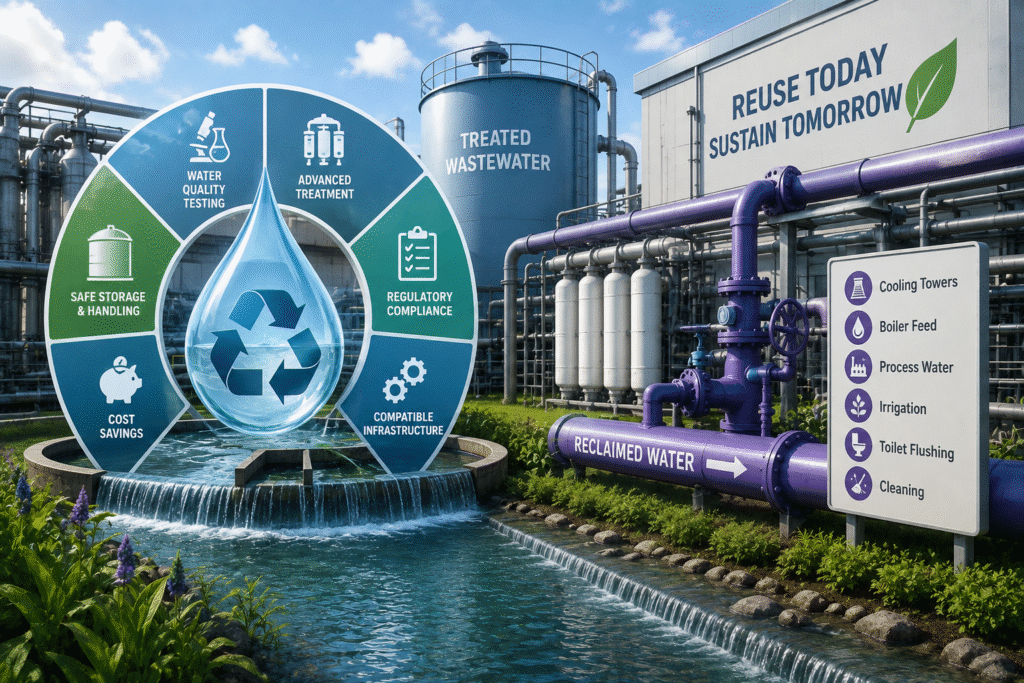
Water shortage isn’t some future problem anymore — a lot of industries are already feeling the pinch, either through rising water costs, tighter local regulations, or supply that just isn’t reliable anymore. That’s exactly why treated wastewater reuse has become such a popular move. But here’s the thing — you can’t just treat your wastewater and start pumping it back into your processes without a second thought. There’s a proper checklist industries need to run through first, and skipping it can cause more damage than it saves.
Let’s break down what actually needs checking before an industry reuses its treated wastewater.
What’s the Water Actually Going to Be Used For?
This is where it all starts. Not every reuse application needs the same water quality. Water going into a cooling tower doesn’t need to meet the same standard as water headed into a boiler feed system or being used for irrigation on-site.
So the first real question is: where exactly is this water going?
- Cooling towers
- Boiler feed water
- Gardening or landscape irrigation
- Toilet flushing or non-potable domestic use
- Process water in manufacturing
- Dust suppression or floor washing
Once that’s clear, everything else — the treatment level, the testing parameters, even the pipeline design — falls into place around it.
Is the Treatment Process Actually Sufficient?
Not all treatment setups are built the same, and a system that’s fine for basic discharge compliance might fall short for reuse purposes. Industries need to check whether their existing treatment plant — usually some combination of primary, secondary, and tertiary treatment — is actually capable of bringing water up to the standard the reuse application demands.
If the current setup isn’t cutting it, this is usually where industries add on:
- Advanced filtration (ultrafiltration, sand filters)
- Reverse osmosis for higher purity needs
- Disinfection systems (UV, chlorination, ozonation)
- Softening systems if the water is headed to boilers
Regulatory and Compliance Requirements
This one gets overlooked more often than it should. Every state pollution control board has its own set of rules around wastewater reuse, and depending on the industry type, there might be additional sector-specific regulations layered on top.
Before reusing any treated water, it’s worth confirming:
- What are the CPCB/SPCB norms for this specific reuse application?
- Does the facility need any additional permits or approvals?
- Are there mandatory reporting or monitoring requirements once reuse begins?
- Is there a difference in allowed parameters for reuse versus discharge?
Getting this wrong doesn’t just risk fines — it can shut down operations altogether if compliance teams flag it later.
Equipment and Infrastructure Compatibility
Treated wastewater, even when it meets quality standards, can behave differently from fresh water in industrial systems. This is a step a lot of facilities forget to check until something breaks down.
Things worth reviewing here:
- Will the water cause corrosion in existing pipelines or equipment?
- Is there a risk of scaling in boilers or cooling systems over time?
- Do specific components (like membranes, valves, or pumps) need material upgrades to handle reused water long-term?
- Is a separate distribution network needed to keep reused water from mixing with fresh water lines?
Storage and Handling Practices
Treated water sitting around without proper handling can degrade in quality fairly quickly — bacterial regrowth, oxidation, or contamination can creep back in if storage isn’t managed properly. It’s worth checking:
- Are storage tanks covered and protected from external contamination?
- Is there a system in place to prevent stagnation?
- How often is stored water tested before it actually gets used?
Cost vs. Long-Term Savings
Reuse systems do come with upfront investment — treatment upgrades, separate piping, monitoring equipment, and so on. Before committing, it makes sense to run the numbers:
- What’s the actual cost of fresh water sourcing right now, and is it likely to rise?
- How much would the industry save annually by reusing a percentage of its wastewater?
- What’s the payback period on the treatment upgrade investment?
In most cases, especially for water-intensive industries, this pays off well within a few years — but it’s still worth confirming rather than assuming.
Final Thoughts
Reusing treated wastewater is one of the smartest moves an industry can make right now, both for cutting costs and reducing environmental impact. But it only works well when it’s done properly. Rushing into reuse without checking water quality, treatment adequacy, compliance requirements, and equipment compatibility usually ends up causing more problems than it solves — clogged systems, compliance issues, or even health risks in some cases. Run through the checklist properly, and treated wastewater reuse turns into a genuinely reliable, long-term solution rather than a quick fix that backfires later.