
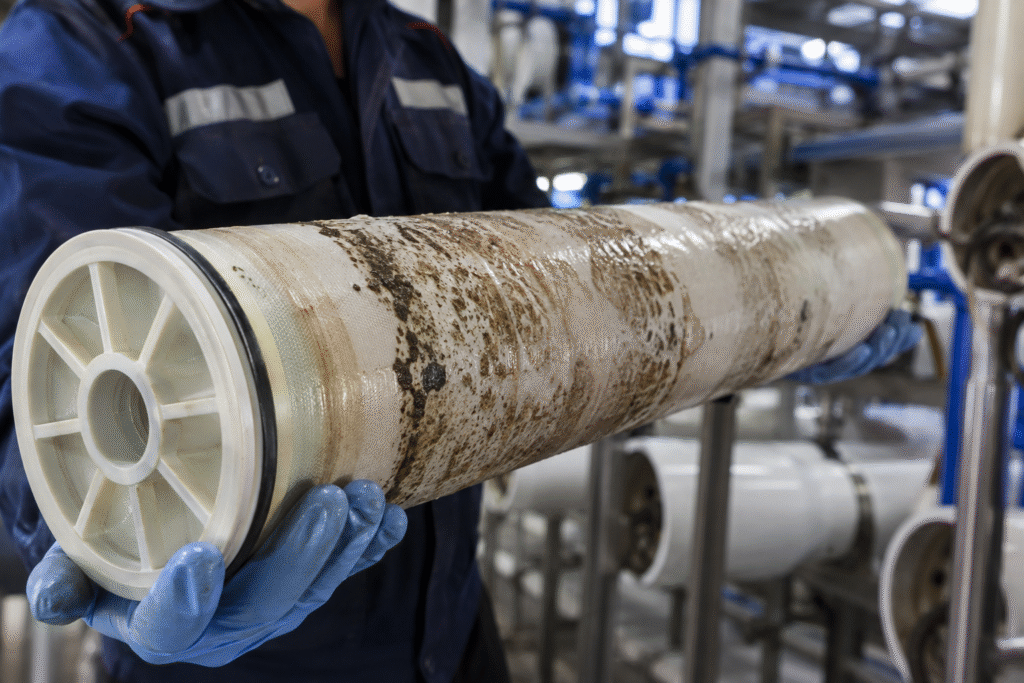
If you run an RO plant, you know this feeling. Everything runs smoothly. Output looks good. Water quality checks out. Then something shifts, slowly. Pressure creeps up. Flow drops. The system works harder for less water. Nine times out of ten, membrane fouling causes this.
Fouling doesn’t announce itself. It builds up quietly, membrane by membrane. Then one day, you check the maintenance report and wonder why your costs jumped. So let’s break down what causes fouling. And let’s talk about how you can stop it before it gets expensive.
What Membrane Fouling Actually Is
Fouling happens when unwanted material builds up on the RO membrane surface. This buildup blocks the pores that let clean water through. Picture a coffee filter you’ve used one too many times. Water still passes through eventually. But it takes far more pressure and time than it should.
Fouling isn’t one single problem, though. It’s actually a mix of different issues. And they all produce the same symptoms: reduced flow, higher pressure drop, and lower permeate quality.
The Main Culprits Behind Fouling
Scaling from dissolved minerals causes most fouling problems. High levels of calcium, magnesium, or silica in feed water create the risk. These minerals precipitate out and form a hard scale layer on the membrane surface. This scale doesn’t just reduce flow. It can permanently damage the membrane if you don’t catch it early.
Organic fouling comes from natural organic matter in the water. Humic acids, oils, and dissolved organic compounds cause this type. They form a sticky film that clings to the membrane. Once this film settles in, it becomes notoriously hard to remove.
Colloidal fouling happens when fine suspended particles build up on the membrane. Silt, clay, and iron particles are the usual culprits. Even clear-looking water can carry enough colloidal material to cause real problems over time. That’s why many operators make a mistake: they trust visual clarity alone.
Biofouling frustrates operators the most. Bacteria and microorganisms don’t just sit on the membrane. They multiply and form a biofilm that keeps growing. You must actively control it, or it spreads fast. By the time your output numbers show a problem, biofouling has often already taken hold.
Why This Matters Beyond Just Reduced Output
Fouling costs you more than slower output. It raises your pressure requirements, which makes your pumps work harder. That pushes energy costs up. It also increases how often you need to clean the system. More cleaning means more downtime and more chemical usage. And membranes that foul repeatedly degrade faster. You end up replacing them sooner than you budgeted for.
So a small dip in performance on paper often hides a much bigger operating expense.
How to Actually Prevent It
Start with proper pretreatment. This step solves — or creates — most fouling problems. Filtration, softening, and chemical dosing before water reaches the membrane can remove much of the material that causes scaling or colloidal fouling.
Monitor feed water quality regularly. Water sources change over time, sometimes even day to day. A pretreatment setup that worked six months ago might not work now. Regular testing catches these shifts before they cause fouling.
Use antiscalants where needed. High-mineral water needs antiscalant dosing. This step prevents scale formation before it starts. It costs far less than treating a scaled membrane later.
Don’t skip disinfection for biofouling control. You can use chlorination followed by dechlorination, UV treatment, or another biocide method. Choose some form of microbial control if your feed water carries any real biological load. Skipping this step because “the water looks fine” gives biofilms a head start.
Stick to a real cleaning schedule. Reactive cleaning costs more than proactive cleaning. Waiting until performance drops noticeably almost always backfires. Membranes cleaned before fouling turns severe recover much better than membranes cleaned only after damage sets in.
Track your operating data closely. Pressure drop, normalized flow, and salt rejection trends tell you a story early. They flag fouling long before it becomes visible. Operators who watch this data catch fouling in time. They fix it with routine cleaning instead of expensive membrane replacement.
Final Thoughts
Membrane fouling isn’t really a mystery. It’s a predictable response to whatever sits in your feed water. You can manage it with the right pretreatment, monitoring, and cleaning routine. Plants that struggle the most treat fouling as a “deal with it later” problem. They should treat it as something to actively prevent instead. Stay consistent on the front end. Test your water. Dose it correctly. Stick to a cleaning schedule. This consistency saves you money and downtime later. Your membranes will last longer. Your system will run more efficiently. And you’ll spend far less time firefighting problems you could have prevented.
Keywords: membrane fouling in RO plants, RO membrane fouling causes, RO plant maintenance, prevent membrane fouling, RO membrane cleaning, biofouling in RO systems, scaling in RO membrane, RO pretreatment, reverse osmosis membrane care, antiscalant for RO systems